 CARLOS DIEGO C. P.
SaaS Factory (The Series) · Part 2 of 2
SaaS Factory — The Series: SaaS 3.0 Business Practices (Part 2/2)
In this post, we will talk about how to carry out the business strategy process for a SaaS model, looking at each of the four macro…
Keywords
In this post, we will talk about how to carry out the business strategy process for a SaaS model, looking at each of the four macro activities laid out in the SaaS Factory model.
As we saw earlier, SaaS Factory presents a dynamic work process that is not necessarily linear. It is clear, however, that four macro activities will invariably make up the big picture: 1) Business planning; 2) Product strategy and development path; 3) Minimum viable service (MVS); 4) Launch and go-to-market (GTM). Let’s look at each of these activities below.
Business Planning
The Business Planning activity is about developing a clear view of the overall elements of your strategy. At this point, the main focus should be on general data gathering. Your company may be looking to provide software as a service and want to develop a
model to find out how financially and strategically ready the market is to receive your offering. The focus here is to capture the information needed to make data-driven decisions about how to offer your SaaS product to the market.
Key activities:
- Assess the opportunity: determine whether a SaaS delivery model is well aligned with customer needs and market dynamics;
- Define segments: build a profile of the different types of customers this SaaS product would target, to learn as much as possible about your customer;
- Assess the market and customer strategy: define your approach to marketing and selling your SaaS offering to new customers, and the staff or incremental costs that may be associated with bringing your new offering to market;
- Model market/segment growth: create projections for your customer growth for each of the target customer segments;
- Finance: develop a target monetization model for the customer segments, projecting the desired revenue, growth and retention for each of your segments;
- Sales transformation: develop a profile for the sales organization and determine the transformation or incremental costs that will be associated with these changes;
- Marketing transformation: develop a strategy to build a brand for your SaaS offering and a marketing profile for the company;
- Define the operating model/resources: define the new SaaS operations footprint and identify any incremental costs associated with hosting, operating and staffing your SaaS business;
- Develop a Team Profile: Assess your team’s business and technical skills and develop a training or hiring plan to fill any skill or industry gaps in the existing team.
Product Strategy and Development Path
The SaaS journey usually begins with a product vision. To get here, you probably already have some idea of the features and customer experience you are after. However, that vision usually lacks detail when you enter this phase of the journey. In the product strategy and development path phase, we are looking to fill in all the details about the product, create a clearer picture of which features will be included, define how the product will be consumed, and how we expect to deliver value to different types of customers.
Key activities:
- Develop user personas and _buyer personas_: Develop profiles of the different types of users and buyers who will use your system, with an emphasis on identifying the natural boundaries (functional, performance, isolation, etc.) that represent increasing levels of value for your customers;
- Gather customer data: gather data from target customers to gain better insight into their product and service requirements;
- Define the onboarding experience: determine how customers will acquire and adopt your SaaS product, with specific emphasis on how you can introduce new tenants through a frictionless model that promotes repeatability and growth;
- Profile security, compliance, geographic and data protection requirements: Capture all the compliance, security, geographic or domain constraints that must be met when delivering your system in a multi-tenant model;
- Define Agility Goals: Describe in detail the agility goals you are targeting and measuring for the SaaS offering;
- Manage the portfolio: Assess performance, identify risks and opportunities, prioritize high-value products.
Minimum Viable Service (MVS)
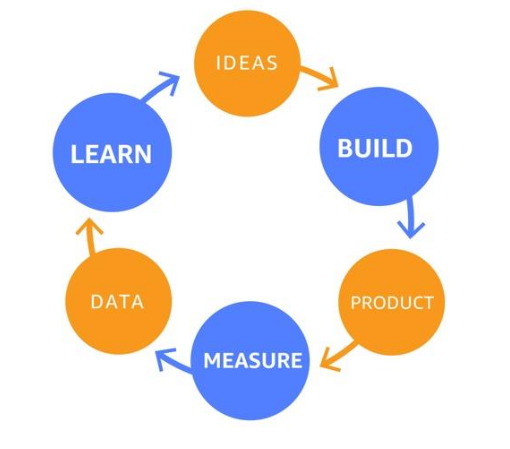
In the Minimum Viable Service (MVS) activity, you should already have a good overall understanding of the business and product strategy. Specifically, this means there is a plan to deliver your solution to meet the needs at or before the time you launch the MVS to a set of customers. Think about how your path to the customer also transforms the entire company responsible for delivering this solution. Once these basics are in place, you will be ready to start asking questions about the scope and goals of an initial offering. This phase of the journey requires you to balance the company’s long-term goals with its short-term ones, with the aim of finding a solution that will let your product enter the market and start pivoting based on real customer feedback. The key is finding a set of features that represent value to your customers, without committing to a delivery schedule that could make you miss your window of opportunity.
Key activities:
- Define the first target users for the MVS launch: the specific users and roles you will target with the MVS. They may be internal or external users;
- Describe the minimum product functionality: based on the tiers and personas you will target, define the set of product features you will need to include in this offering;
- Design the Minimum Operational Experience: Define the elements that will need to be put in place to successfully operate this solution;
- Target Feedback Experience: Determine how you will engage potential customers to get feedback on your minimum viable service;
- Define Core SaaS Principles for the MVS: capture and document the core principles that will define where the SaaS bar is being set for this initial offering. This is important to ensure success in each delivery;
Launch and Go-to-Market (GTM)
In this phase, you have created a data-driven strategy, accounting for both retention and business expansion, and a service model that can scale alongside customer acquisition. This will ensure the appropriate resources are in place to drive low-friction onboarding experiences, accelerate time to value (TTV), and run sales expansion and renewal cycles. These services may include a digital approach, a human one, or a combination of both.
Key activities:
- Update customer journey maps: refine the buyer and user personas built during Product Strategy; incorporate lessons learned during the MVS phase to add attributes tied to buying behavior, onboarding experiences and product usage patterns;
- Establish commercial and operational structures for acquiring new customers: Define customer acquisition objectives for year one, including revenue targets and annual contract value (ACV) targets;
- Define customer retention and expansion objectives: Forecast retained revenue (net of churn) and expansion revenue (up-sell, cross-sell);
- Determine appropriate sales motions and compensation incentives: Determine a relevant distribution model for acquiring new customers, usually some combination of pre-sales, inside sales, field sales and partner/channel sales resources;
- Establish marketing operations: plan marketing operations to span the entire customer lifecycle, covering new customer acquisition and expansion opportunities;
- Define the customer success (CS) charter and services: establish the core customer success charter — usually adoption or renewal, less commonly expansion — and a handshake process between sales and customer success that precedes new customer onboarding;
- Product launch and communication strategy: define the scope of your product updates and their impact on customers, including metrics that will help you measure the effectiveness and continuous improvement of your communication plan.
Although we have presented a general flow for your SaaS journey here, it is essential to let your customers, both current and future, be your ultimate guide. Throughout this process, you will likely need to make decisions that will require changes in how your teams are organized, how they work together, and how they adopt new cultural principles as part of the move to a SaaS delivery model. Leverage this framework in whole or in part. Use whatever you need or whatever makes sense for your business. You just need to get started.
To learn more about SaaS business practices on AWS, check out the SaaS Journey Framework at https://amer.resources.awscloud.com/building-saas-on-aws/saas-journey-framework-building-a-new-saas-solution-on-aws.
In the next part of our series, we will talk about Tenant Isolation Architectures in SaaS.
SaaS Factory (The Series) — How to Build Software as a Service Solutions on AWS
See you in the next post! =)
Comments
Every comment is moderated before it appears here. Nothing is published automatically.
Loading…