 CARLOS DIEGO C. P.
Essay · Sciences
In the End, Only What Always Mattered Remains
Keywords
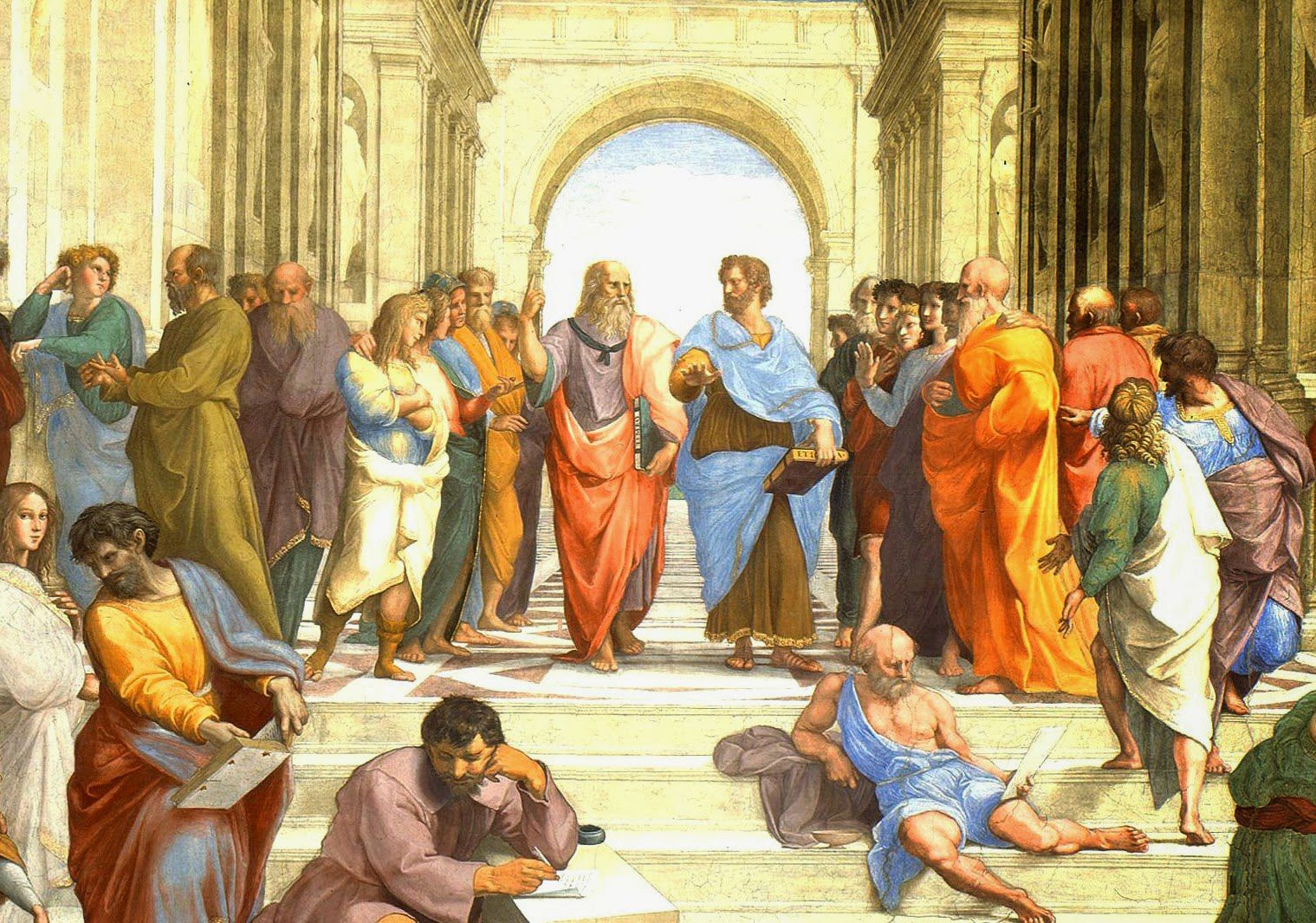
Over the past two decades, we pulled off an admirable feat, the kind that enters human folklore alongside such great inventions as the screw, fire, and the excuse “my Wi-Fi dropped.” We convinced entire generations of young people that preparing for the market was enough, as if the market were some benevolent deity that would reward anyone who showed up with goodwill and a two-page résumé. For some unfathomable reason, we declared that academia — that stubborn old lady who insists on teaching fundamentals — was no longer needed for these new times.
And so we went on, proud of our civilizational exploit, turning out professionals who are experts in abstractions yet know nothing whatsoever of the foundations that hold those abstractions up, their inner gears, their computational ontologies. Technical training, that noble and necessary stage meant to serve as a doorway to understanding the world, is fundamental, of course, but insufficient for anyone who believes that understanding the app is the same as understanding the universe. In short, we became excellent users of things whose principles we forgot to learn, as if operating the surface were enough to comprehend the depths.
With the rise of artificial intelligence, those very abstractions we never really understood became easily executable by tireless, statistically gifted machines. After all, in a computational ontology the rules are already well defined, aligned, ordered, and ready to be savored by any algorithm with an appetite for prediction. And since AIs, for now, are nothing more than sophisticated engines of statistics applied at industrial scale, they outperform us at carrying out those calculations. It is mathematics doing what mathematics does, while we look on with the expression of someone trying to assemble Swedish furniture without the manual.
What sets us apart, then, from machines and their scalable powers of prediction is our capacity for judgment. That mysterious, subjective, uncomfortable artifact which insists on reminding us that some decisions reach far beyond the domains of arithmetic. They are philosophical, ethical, and profoundly human decisions, such as the terrible question “should I commit a minor traffic violation to get to the hospital faster and save a loved one in a medical emergency?” or the equally fraught decision of “should I make an exception to company rules to help an employee facing a family emergency?” Mathematics does not settle these. Statistics slip out the back door. And AI, poor thing, freezes.
Many fear that a time will come when humans and machines will be at each other’s throats, perhaps over a colossal misunderstanding, perhaps because we insisted on treating them as underpaid personal assistants. Even if both become rational — when and if the latter achieves that feat — humanity’s historical pattern tends to be seasoned with a generous dose of irrationality, conflict, and unfortunate decisions made after sleepless nights. For now, though, the worry that weighs most heavily on the chest is not the epic battle of the future, but the working relationships of the present.
And whether for a possible apocalyptic future or for a pragmatic present — akin to the great revolutions, such as the industrial one — humans are left with only one weapon: knowledge.
It is knowledge that shapes intelligence, that gives thought its skeleton, that reminds us that abstractions are made of something more than colorful buttons and friendly interfaces. Never has it been more necessary to seek knowledge in all its forms. From the holistic to the deeply technical, from the general to the absurdly specific, all that matters is that it makes sense to you and keeps your mind alight. This is not the famous "T-shaped knowledge" confined to your own field, but knowledge of a breadth that reaches across other sciences. After all, your favorite LLM is not an expert in cooking alone.
Knowledge alone, that old companion who was always there, is the true weapon for remaining relevant in any human role in an age of artificial intelligence.
In the present. In the future.
And, for the record, it was always so. The difference is that now, with the competition from machines growing before our very eyes, it has finally become obvious even to us, the supposed forerunners of rationality.
Comments
Every comment is moderated before it appears here. Nothing is published automatically.
Loading…