 CARLOS DIEGO C. P.
Essay · Sciences
The Symphony of Identity: How the Music of Adolescence Shapes Our Children’s Character
Keywords
My fondness for music is no secret to anyone who knows me even slightly. I am always quoting it in my writing and my classes, or even when I share my statistics of what I have listened to over the past twelve months – thank you, Spotify! Across the more than 70,000 minutes I listen to in an average year, there is not a single activity in my daily life during which I am not listening to music. It cradles personal, family, and professional moments, serving at times as a balm amid the challenges of everyday life. More recently, I have begun to notice that this habit of mine is being absorbed, little by little, by my children — especially my eldest daughter, who is now turning 12 and entering preadolescence. My youngest son, on the other hand, is 7 and seems to be starting to realize that music can be his ally, particularly in helping him with his emotions. Both have their own playlists, gathering different styles and artists, a sign that the discovery of their preferences — and of how different songs affect them — is well under way.
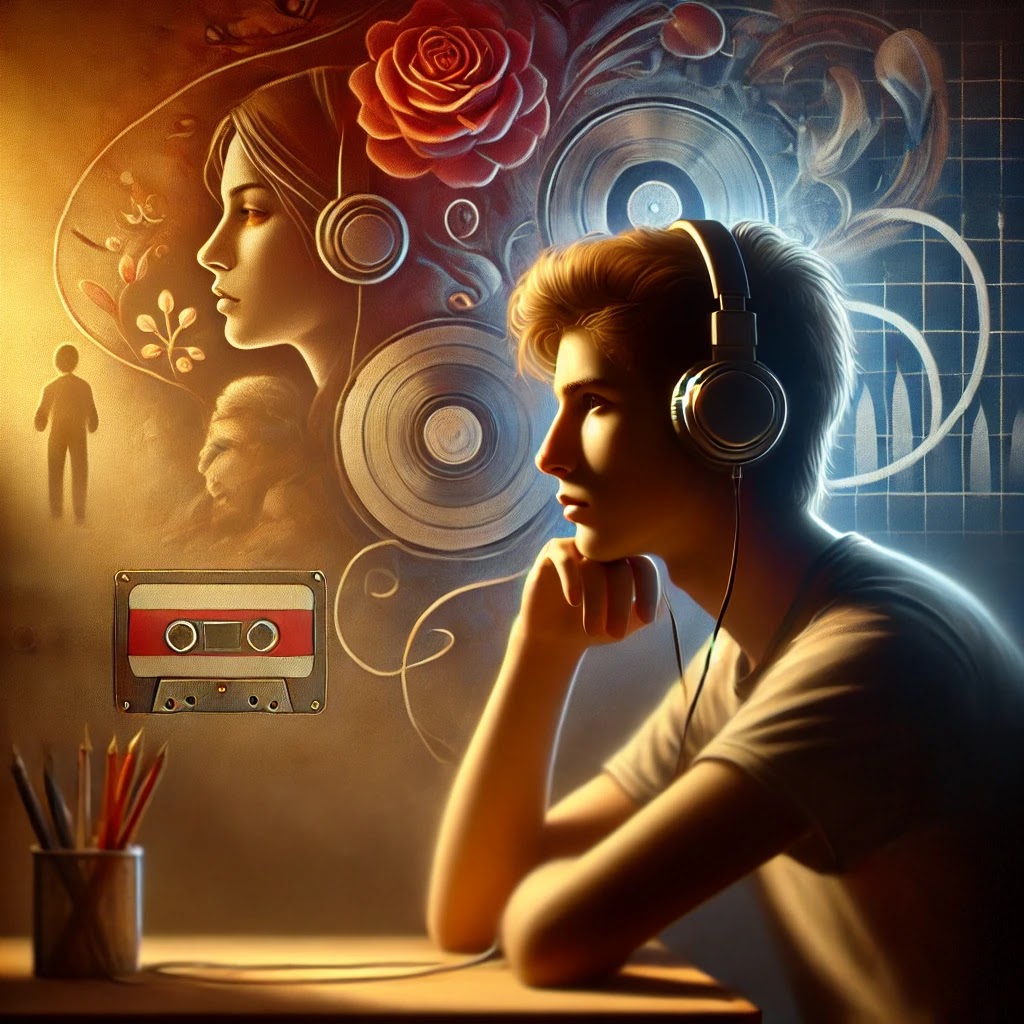
Music does, in fact, transcend mere entertainment, acting as a powerful architect of human identity. Since the dawn of civilization, it has been a vehicle for expressing emotions, passing on values, and building social bonds. Lately I have become even more interested in how music acts upon us. Then, recently, I came across some fascinating studies on music’s capacity to evoke memories and stir feelings. One of them, conducted by Dr. Daniel Levitin of McGill University, revealed striking details about the correlation between music, our feelings, and our personalities. As he observed, there is a direct relationship between music and personal experience, and this connection is especially strong during adolescence, a crucial period for the formation of character and identity. The songs that accompany this stage of life leave an indelible mark on the brain, shaping our musical preferences and influencing our emotions throughout our lives [1].
Adolescence, with its emotional turbulence and its search for identity – something I am experiencing firsthand with my eldest daughter, while still holding vivid memories of going through that stage myself – is fertile ground for forming deep bonds with music. During this phase, the brain is in constant development, creating new neural connections and establishing patterns that will last a lifetime. The songs that resonate with us at this time become the soundtracks of our experiences, emotions, and memories, creating a deep and lasting connection [2]. The intensity of the emotions lived through in adolescence, combined with the malleability of the developing brain, makes this period especially conducive to forming strong and lasting associations between music and memory.
Levitin’s research invites us to reflect on the power of music in shaping character, especially in our children’s lives. In a world increasingly dominated by technology and mass culture, music becomes an even more important tool for building values and passing on knowledge. By understanding the power of musical nostalgia, we can use this tool consciously and responsibly, guiding our children as they build a more positive and meaningful future.
The critical period of adolescence
Adolescence is a period of great emotional turbulence, above all because it is the stage of life in which we are seeking to consolidate our identity. It is likewise a decisive period for the formation of our musical preferences. During this phase, the brain is in constant development, creating new neural connections and shaping who we are. Levitin’s study reveals some surprising findings.
One of these findings indicates that the songs we hear between the ages of 12 and 15 set off a chain reaction in the emotional areas of the brain, leaving an indelible mark on our memory [2]. Another important conclusion of the study is that musical nostalgia peaks at around age 17, when the songs we hear leave a permanent emotional imprint on our memories and personalities [3]. The songs of adolescence activate the brain areas responsible for emotion, creating strong and lasting associations not only with the experiences of that period but also with how we will respond to similar situations at other points in our lives. Another relevant finding is that after age 30, our capacity to form new, deep emotional connections with music gradually diminishes [4]. That is why, when we revisit the songs that marked us, we will seldom find among our memories songs that do not predate that period of our lives.
The Neuroscience of Nostalgia: A tool for shaping character
Musical nostalgia is not merely a matter of personal preference but a neurobiological phenomenon. Our brains are wired to value past experiences, and the songs of adolescence become an integral part of our identity [5]. Musical nostalgia helps us build and sustain a coherent sense of identity, reconnecting us with who we were and with the values that shaped us [6]. In other words, music works both as a tool and as an attribute of our identity.
We can use musical nostalgia consciously to regulate our emotions, “hacking” our own system in order, for example, to increase our well-being and even improve cognitive performance [7]. There is also a legitimate validation of our nostalgia with respect to our system of preferences. The feeling that "the old music was better" is not mere wistfulness but a real neurological response, confirmed by Levitin’s study, especially given this striking correlation with the musical experiences we lived through in adolescence [8].
Implications of music as a tool for shaping character
Levitin’s findings alert us to the power of music in shaping character, especially in our children’s lives. Music is not just entertainment but a powerful tool that can shape their values, beliefs, and behaviors. Here is an interesting exercise: picture all the people you know and match them with their musical preferences. You will notice a pattern that may classify them not only by their tastes as entertainment but also by personality traits and value constructs. The complexity of the melodies, the depth of the lyrics, the ideals expressed in the songs — all of them, in some way, commune with our preferences and, above all, with our values. They are not merely arbitrary choices made on a carefree weekend among friends.
Findings like these point to the importance of our role as parents, and to how this aspect of life – music, until now usually seen as entertainment, and our preferences, seen as happenstance and random outcomes of fate – may permeate deeper traits of our personality. Studies like this one reveal an additional dimension of our responsibility to guide our children in choosing the music they consume, since it can – and eventually will – influence their worldview and their values.
Music can be used as a powerful educational tool, conveying positive values, teaching history and culture, and fostering emotional and social development. Exposing our children to a variety of musical genres can broaden their horizons, stimulate their creativity, and promote tolerance and respect for cultural diversity. The songs our children listen to today, in turn, will be the soundtracks of their lives, shaping their memories and influencing their emotions in the future. By understanding the power of musical nostalgia, we can use this tool consciously and responsibly, guiding our children as they build a more positive and meaningful future.
References
[1] Levitin, D. J. (2006). This is your brain on music: The science of a human obsession. Dutton.
[2] Janata, P. (2009). The neural architecture of music-evoked autobiographical memories. Annals of the New York Academy of Sciences, 1169(1), 193-198.
[3] Krumhansl, C. L. (2011). An exploratory study of musical memories and emotions across the lifespan. Psychology of Music, 39(3), 339-363.
[4] Lamont, A. (2011). Musical identities in adolescence. In Musical identities (pp. 71-88). Oxford University Press.
[5] Juslin, P. N., & Västfjäll, D. (2008). Emotional responses to music: The need to consider underlying mechanisms. Behavioral and brain sciences, 31(5), 1 559-575.
[6] Wildschut, T., Sedikides, C., Routledge, C., Arndt, J., & Cordaro, F. (2010). Nostalgia as a repository of social connectedness: The nature, determinants, and consequences of feeling homesick. Journal of personality and social psychology, 98(4), 573.
[7] Barrett, L. F. (2017). How emotions are made: The secret life of the brain. Houghton Mifflin Harcourt.
[8] Schulkind, M. D., & Wakkary, R. (2011). Music, emotion, and autobiographical memory: Are musical memories special?. Psychology of Music, 39(3), 317-338.
Comments
Every comment is moderated before it appears here. Nothing is published automatically.
Loading…